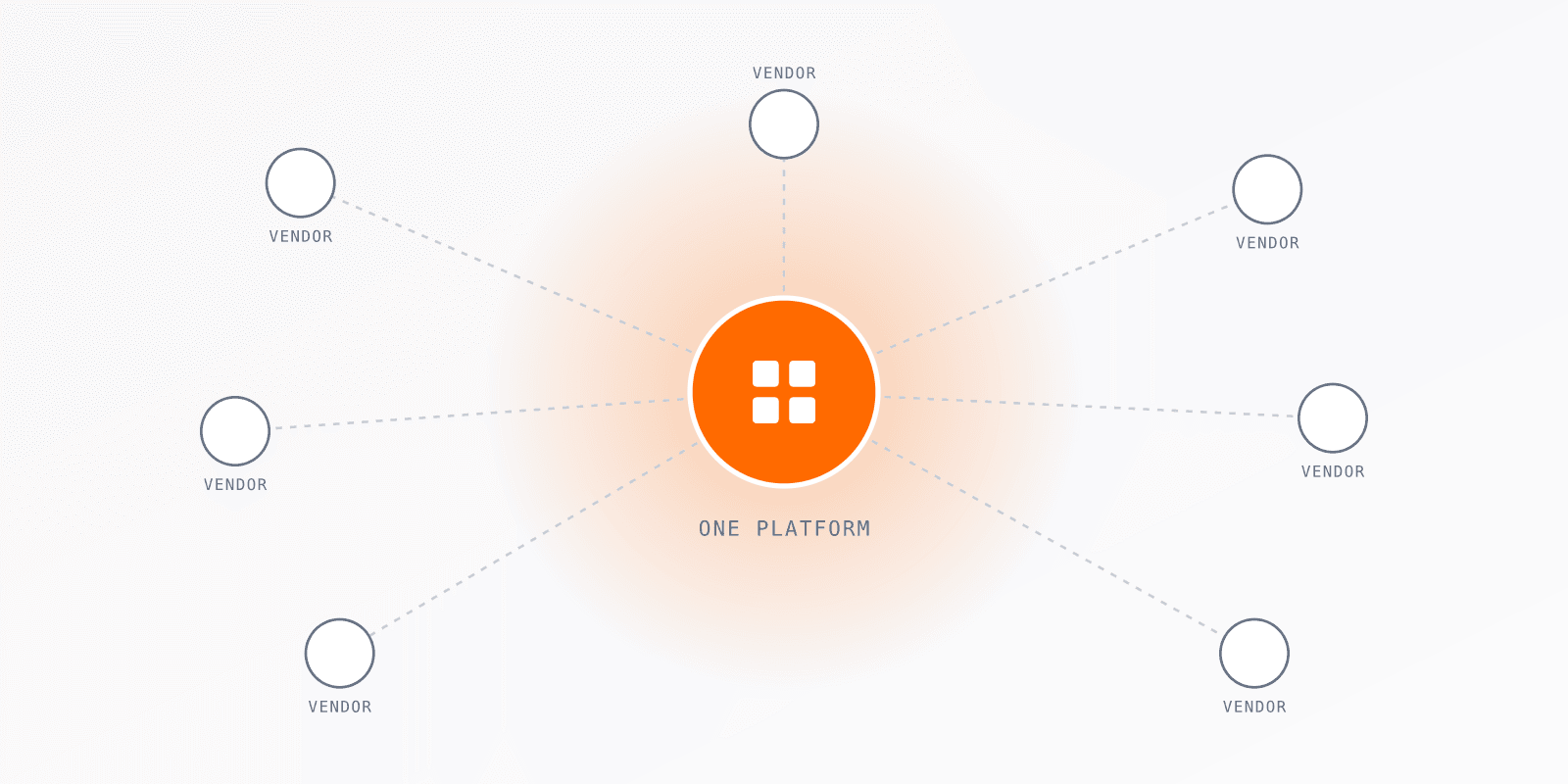
Ask any facility or admin head running procurement across multiple offices how many active vendors they're managing, and the number is rarely small. One for office supplies. Another for pantry. A separate one for cleaning consumables. A local vendor per city for furniture repairs. Each one with its own invoice cycle, its own pricing, its own point of contact.
It works, until it doesn't. We've written before about why PO-led procurement breaks down at scale; vendor sprawl is one of the biggest reasons it does.
The hidden cost of vendor sprawl
None of these costs show up on a single invoice, which is exactly why they're easy to miss:
- Administrative overhead. Every additional vendor means another onboarding, another contract, another invoice to reconcile, another person to chase for a delayed delivery.
- Price drift across locations. When each city office negotiates its own supplier relationships, the same category of spend (pantry supplies, say) can vary significantly in price from one branch to another, with no one tracking the gap.
- No volume leverage. Splitting your annual spend across eight small vendors means you never negotiate from a position where your order size actually matters to any of them.
- Inconsistent quality and SLAs. Ten vendors means ten different standards for what "on time" and "in spec" mean.
- No single source of truth. When leadership asks what you spent on facility supplies last quarter, the honest answer requires stitching together numbers from every vendor separately.
What consolidation actually buys you
- Negotiating leverage. Concentrated volume gives you pricing power a fragmented spend never will.
- One SLA to manage. A single delivery standard, a single escalation path, a single relationship to hold accountable.
- Consolidated reporting. One statement of spend across categories and locations instead of a dozen partial pictures.
- Faster fulfillment. A platform that already stocks and delivers across your categories removes the lag of sourcing a new vendor every time a new need shows up.
What to watch out for
Consolidation isn't free of trade-offs, and it's worth being honest about them:
- Single point of failure. Putting everything through one supplier means their outage is your outage, so check fulfillment redundancy before committing.
- Category specialists still matter. Highly specialized categories, like certified lab equipment or industry-specific compliance items, may still need a dedicated vendor rather than a generalist.
- Don't consolidate to a vendor that can't scale with you. A supplier that works for one office may not have the depth to serve ten.
A practical framework to consolidate
- Audit your current vendor list. Pull every active supplier across every category and location. Most teams are surprised by the count.
- Categorize by criticality and overlap. Flag which categories genuinely need a specialist versus which are commodity spend (office supplies, pantry, cleaning, basic furniture) that a broad supplier can absorb.
- Pilot with one or two categories. Move your highest-friction, most repetitive category first; pantry and office supplies are usually the easiest wins.
- Measure before expanding. Track delivery time, pricing versus your old vendors, and admin hours saved before rolling the consolidation out further.
- Renegotiate or exit the redundant vendors. Once the pilot category is stable, wind down the vendors it replaced.
Signs you're ready to consolidate
- You can't answer "what's our total facility spend this quarter" without a spreadsheet exercise.
- Pricing for the same item varies noticeably between your offices.
- Your procurement or admin team spends more time chasing vendors than making decisions.
- You're opening new locations and don't want to rebuild a vendor list from scratch each time.
This is the exact gap Nxtby's business procurement platform is built to close: office supplies, pantry, cleaning, furniture and rentals sourced, priced and delivered through a single account instead of a dozen separate vendor relationships.