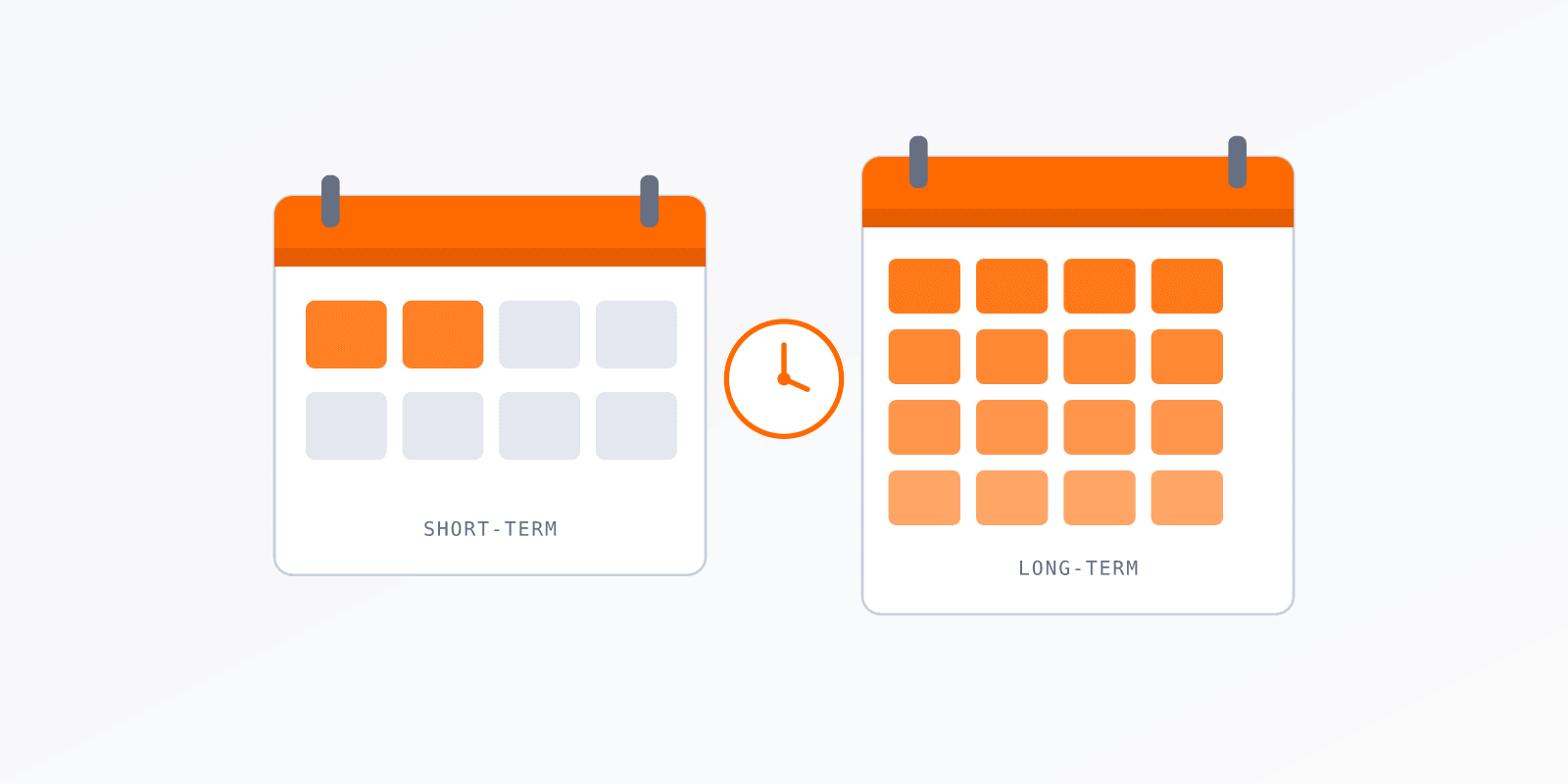
Not every rental decision is the same decision. Renting desks for a six-week project team is a different call than renting furniture for an office you expect to occupy for three years, and pricing, flexibility and what's included tend to shift meaningfully between the two.
What changes between short-term and long-term rental
- Per-unit pricing. Short-term rentals, typically under six months, usually carry a higher monthly rate to compensate the provider for lower utilization and faster turnaround. Long-term commitments (12-plus months) usually unlock lower per-seat pricing.
- Minimum commitment. Short-term plans are built around flexibility, often running month-to-month past an initial minimum. Long-term plans lock in a rate in exchange for a fixed term.
- What's bundled. Long-term rentals more often include free maintenance, swaps and periodic refreshes as part of the base price; short-term plans may charge separately for anything beyond delivery and pickup.
- Exit flexibility. Ending a short-term rental early is usually straightforward. Breaking a long-term contract early can carry a penalty, so read the fine print before committing to a 24-month rate to save on the monthly number.
When short-term rental is the right call
- Project and contract teams with a known end date: don't furnish for a team that won't exist in four months.
- Piloting a new city or office before committing to headcount or lease length.
- Seasonal or event-driven scale-ups: extra workstations for an internship batch, a hiring surge, or a temporary project room.
- Testing a space before a long-term buildout: furnish light while you finalize the permanent office design.
When long-term rental is the right call
- A core office you expect to occupy for at least a year, where the lower monthly rate outweighs the flexibility premium.
- Stable teams with predictable headcount: you're not planning to return the furniture within the term anyway.
- When bundled maintenance matters: long-term plans that include upkeep remove a recurring admin task, not just a furniture decision.
A hybrid approach works for most growing companies
In practice, the best answer is rarely all short-term or all long-term. A common pattern:
- Lock in long-term rental for your core, stable-headcount floor.
- Use short-term rental for anything tied to a project, pilot, or team you expect to change within the year.
- Revisit the split every 6–12 months as headcount and office plans firm up. What started as short-term for an uncertain team often graduates to long-term once that team proves permanent.
Questions to ask before you sign
- What's the minimum term, and what's the penalty for ending early?
- Is maintenance and swap-out included, or billed separately?
- How fast can I scale up if the team grows mid-term?
- What condition is the furniture expected to be returned in, and is there a damage clause?
Whichever mix fits your situation, the goal is the same: match the commitment to how certain you actually are about the team using it. Nxtby offers both short-term and long-term rental plans across furniture, appliances and work-from-home essentials, so you're not forced into a 12-month contract just to get a fair price on a 3-month need.